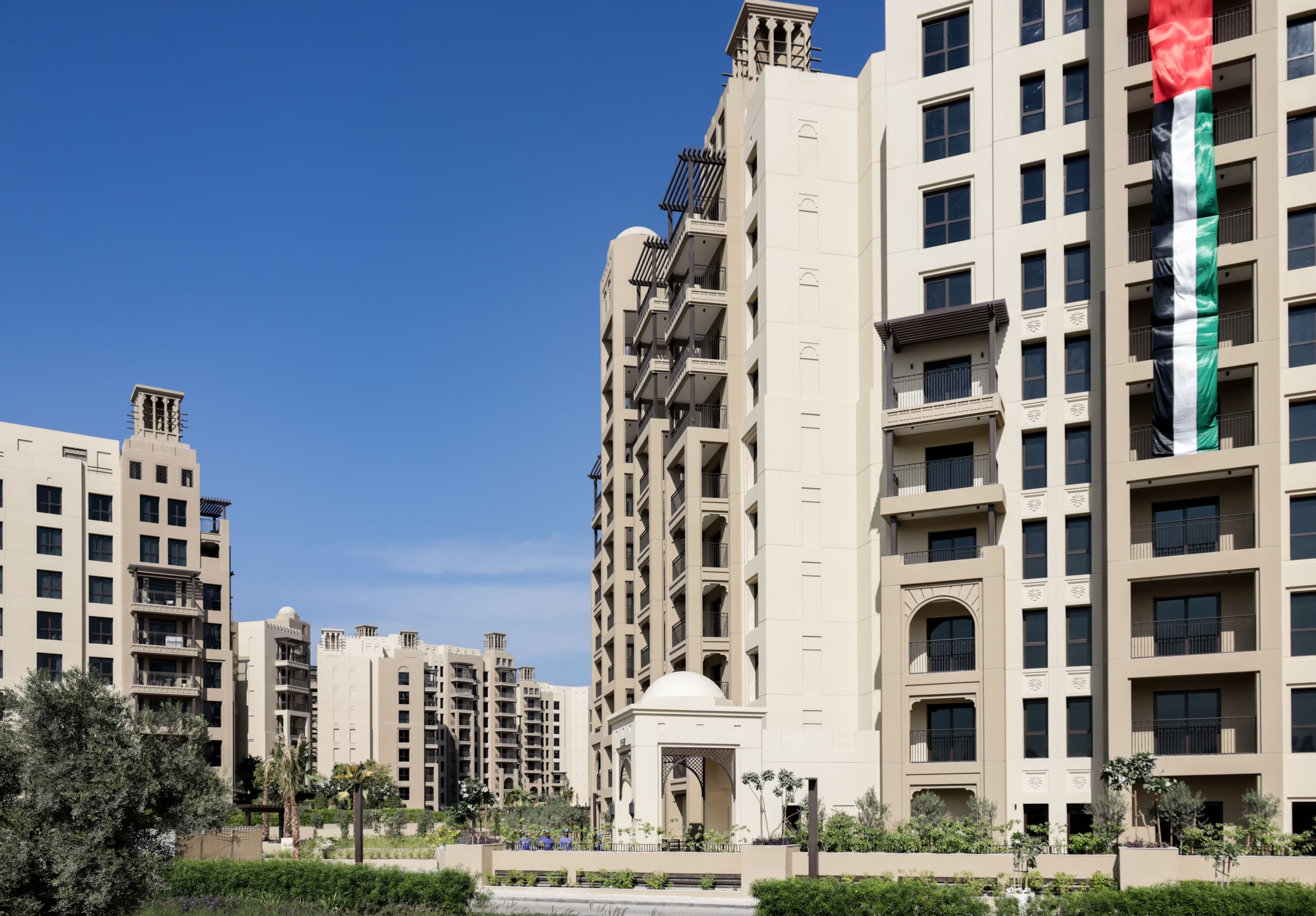

Moving from Dubai to Abu Dhabi means driving just 140 kilometers down the E11 Sheikh Zayed Road—a journey that takes less than 90 minutes. Physically, it feels like a simple local move. Administratively, however, relocating to the UAE capital means completely shifting your legal and operational footprint from one distinct government system to another.
Unlike a local move within Dubai Marina or JVC, an inter-emirate relocation requires synchronizing two different utility authorities, two different municipal tenancy systems, and the strict property management protocols of two different cities. If your moving truck leaves Dubai but you haven’t properly registered your Abu Dhabi paperwork, your furniture could be stranded on the highway or denied entry at your new community gates.
From managing the transition between DEWA and ADDC to understanding commercial truck bans on the highway, executing a flawless inter-emirate move requires a highly specific timeline. We have engineered the ultimate 2026 guide to moving from Dubai to Abu Dhabi to help you navigate the costs, the paperwork, and the logistics without the headache.
Phase 1: The Legal Handover (Ejari to Tawtheeq)
Your first hurdle is shifting your official tenancy registration from Dubai’s system to Abu Dhabi’s system.
- Canceling Your Ejari (Dubai): When you vacate your Dubai apartment, you (or your landlord) must officially cancel the Ejari registration. If you fail to cancel your Ejari, your DEWA account cannot be permanently closed, and your landlord may withhold your security deposit.
- Registering Your Tawtheeq (Abu Dhabi): Abu Dhabi uses the Tawtheeq system. The moment you sign your new Abu Dhabi lease, it must be registered through the government’s TAMM portal. Crucial Note: You absolutely cannot connect your water and electricity at your new Abu Dhabi home without an active Tawtheeq certificate. Get this done immediately after signing the contract.
Phase 2: Utilities (DEWA Disconnect to ADDC Connect)
Transferring utilities between emirates requires careful timing. You cannot simply “transfer” an account; you must close one and open an entirely new one.
- The DEWA Final Bill (Dubai): At least a week before moving day, request a DEWA disconnection for your exact move-out date. Pay your final bill immediately. Most strict Dubai property managers (like Emaar or Nakheel) will refuse to issue your Move-Out NOC until you show them the DEWA final clearance receipt.
- The ADDC Activation (Abu Dhabi): Once your Tawtheeq is active, initiate your new account with the Abu Dhabi Distribution Company (ADDC). Pay the mandatory security deposit (AED 1,000 for apartments, AED 2,000 for villas) and schedule the activation for at least 24 hours before your movers arrive. You need the air conditioning running when the crew is unloading boxes in the Abu Dhabi heat.
Phase 3: The Double NOC Requirement
Because you are moving between two different cities, you must battle the property management portals of both emirates simultaneously.
- Dubai Move-Out NOC: Apply for your exit permit via your current building’s app (e.g., Dubai REST, Emaar ONE). You will need to settle all outstanding chiller bills and present your DEWA clearance.
- Abu Dhabi Move-In NOC: Log into your new building’s portal (e.g., Aldar Connect, Provis, Khidmah). You will need to upload your Tawtheeq, your passport, and the Trade License of your chosen moving company.
Pro-Tip: Ensure your moving company is fully licensed. Abu Dhabi building management is notoriously strict. If your mover is an unlicensed “man-with-a-van,” Provis or Khidmah security guards will reject the NOC and block the truck from entering the loading bay.
E11 Highway Logistics and Inter-Emirate Moving Costs
Moving inter-emirate alters the traditional pricing and logistical structure of a standard local move.
The Cost Premium for Inter-City Moving
Because the moving company must factor in highway fuel, toll gates, and the travel time that consumes their crew for the entire day, a Dubai-to-Abu Dhabi move carries a premium. Expect to pay roughly AED 300 to AED 800 more than you would for a local Dubai move.
- 1-Bedroom Apartment: AED 1,400 – AED 2,200
- 2-Bedroom Apartment: AED 2,000 – AED 3,200
- 3-Bedroom Villa: AED 3,500 – AED 6,500+
Truck Bans and Highway Tolls
The UAE heavily regulates commercial heavy vehicles on major highways to ease commuter traffic.
- Peak Hour Bans: Moving trucks (typically 3-ton closed vehicles) are frequently banned from certain sections of Sheikh Zayed Road and entry points into Abu Dhabi during morning (6:30 AM – 9:00 AM) and evening (3:00 PM – 6:00 PM) rush hours. Your moving company must time their departure from Dubai perfectly so they don’t get stuck at a highway truck rest stop waiting for the ban to lift.
- Toll Gates: The truck will pass through Dubai’s Salik gates and Abu Dhabi’s Darb toll gates. Reputable moving companies absorb these commercial toll fees into their flat-rate quote. Always confirm that toll charges are included so you aren’t hit with a surprise bill upon arrival.
How to Choose an Inter-Emirate Moving Company
Not all local Dubai movers are equipped for a 140-kilometer inter-emirate relocation. When vetting companies, look for these three specifics:
- Closed, Insulated Trucks: Do not hire a mover with an open-back pickup truck. Driving at 120 km/h on the E11 highway exposes your furniture to high-speed dust, debris, and extreme heat. Only accept quotes from movers using fully enclosed, insulated commercial box trucks.
- Valid Trade Licenses: To execute an inter-emirate move smoothly and clear the security gates of premium Abu Dhabi communities, the mover must have a verified commercial trade license (either from Dubai DED or Abu Dhabi ADDED).
- All-Inclusive Quotes: Ensure the written PDF quote explicitly states “Inter-Emirate Transport” and includes fuel, Salik/Darb tolls, and all packing materials.
Frequently Asked Questions (FAQ)
Understanding Dubai to Abu Dhabi Relocations
Do I need a new Emirates ID when moving to Abu Dhabi?
No, your Emirates ID remains valid regardless of which emirate you reside in. However, you should update your registered residential address in the Federal Authority for Identity, Citizenship, Customs & Port Security (ICP) system and notify your bank of your new Abu Dhabi address.
Will Etisalat or du transfer my internet to Abu Dhabi?
Yes. Both Etisalat and du operate nationally. You can request a “Relocation of Service” via their mobile apps. They will disconnect the router in your Dubai apartment and dispatch a technician to activate the fiber-optic connection at your new Abu Dhabi address. Initiate this at least 5 days before your move to avoid an internet blackout.
How do I move my car from Dubai to Abu Dhabi?
If your car is registered in Dubai, you can legally drive it and keep your Dubai license plates while living in Abu Dhabi, provided your insurance covers you (which all national UAE policies do). If you want to change your plates to Abu Dhabi, you will need to open a traffic file with Abu Dhabi Police, pass a vehicle inspection, and re-register the car locally.
Master the Paperwork First
Moving from Dubai to Abu Dhabi is an exciting transition to a more relaxed, family-oriented lifestyle, but the logistics demand a highly organized approach. The physical distance is short, but the bureaucratic distance is vast. By proactively canceling your Ejari, registering your Tawtheeq, timing your DEWA/ADDC utility switch, and hiring a moving company familiar with E11 highway truck bans, you can bridge the gap effortlessly. Treat the paperwork with as much urgency as packing your boxes, and your inter-emirate relocation will be a complete success.